How it is done now
One failure produces a dozen alerts. Three dashboards later you arrive at a cause a colleague already found last month.
13,100 events in 30 days
Why it stalls
Tools that only detect make the pager louder. Nothing acts, so the postmortem gets written days later from memory.
Cause re-derived each time
With CloudThinker
Resolve groups the related alerts, identifies the cause, stages a fix and then verifies that it held.
12 incidents, 13,100 events
Morning
Before standup, read the night’s timeline. Cause, action and evidence are recorded, so you review rather than reconstruct.
In flow
Let the agents take first response. Answer what they escalate and treat the rest as handled.
End of day
Correct the drafted postmortem while the detail is fresh, then publish it the same day.
Resolve
Detects, diagnoses, fixes, then proves the fix held.
Assessment
Explains the fragility that produced the page.
Correlate the last hour of alerts across checkout, the queue and the database.
Common mistake
Approving a fix you cannot read. Ask for the plan, then approve.
What to expect
Fewer overnight interruptions, more attention for real failures.
How noise becomes a decision queue
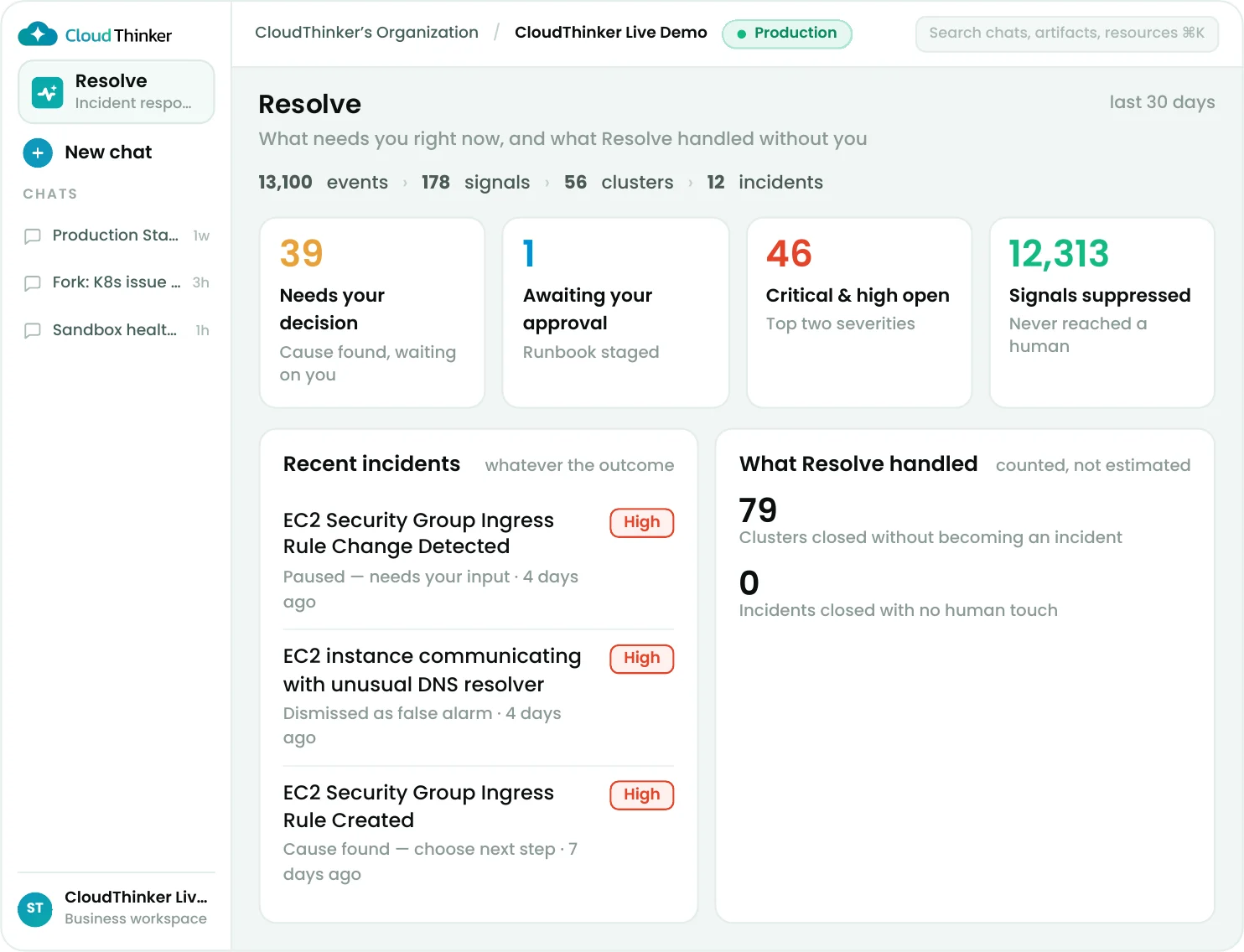
Read an incident view from the top down: the reduction funnel first, then the cards that name a person. The sample below covers one month.
01
Start with the funnel. How many raw events became incidents tells you how much noise you no longer handle by hand.
02
Work only the cards that ask for a person, usually decisions and approvals. Everything else is handled or dismissed.
03
Expect every row to carry its own state. A queue that makes you re-derive the cause is not doing its job.