How it is done now
The pager fires on every threshold breach. You triage from a phone and hope the runbook is still current.
11 pages the week before
Why it stalls
Suppression is a configuration nobody owns, and the handover gets written from memory at 07:00.
Alerts silenced at night
With CloudThinker
OnCall pages you only for what survived suppression, and each page carries a cause and a staged runbook.
3 pages, 0 escalations
Shift start
Read the handover first: what is open, what was suppressed, and what the last shift decided.
On shift
Answer the pages that reach you. Each arrives with a cause and a staged runbook to approve or reject.
Shift end
Approve the drafted handover and add the context only you have.
OnCall
Holds the rotation, the escalation policy and the page itself.
Resolve
Takes first response before a page is ever sent.
What is still open from the last shift, and what is waiting on a decision?
Common mistake
Silencing an alert to survive the night. Send it back with the reason instead.
What to expect
The pager fires less, and each page arrives with a plan attached.
How a shift looks when suppression works
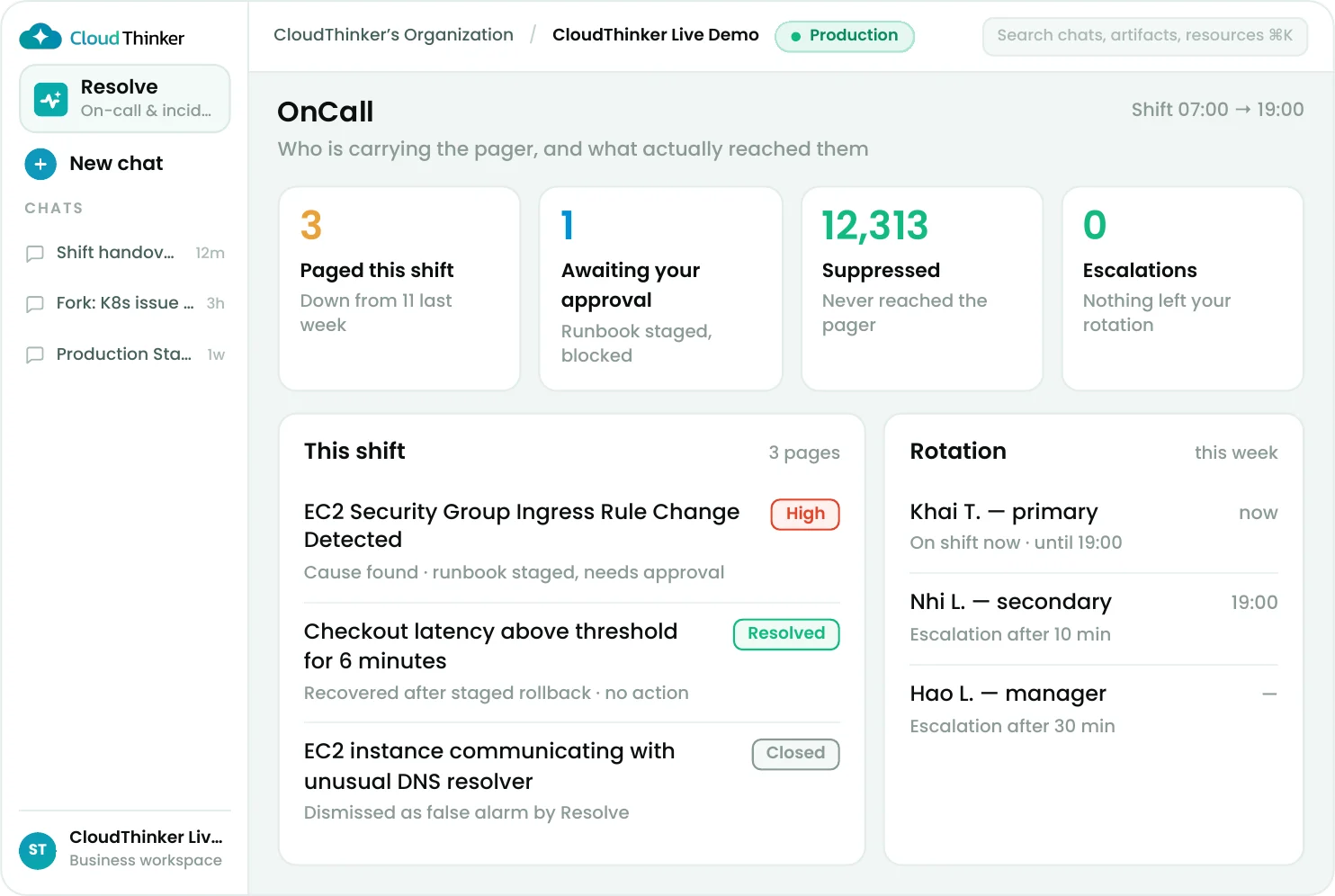
Read a shift as what reached you and what did not. The sample below shows one twelve-hour shift.
01
Check the suppression count. It tells you what the rotation no longer absorbs by hand.
02
Expect a cause and a staged runbook on every page. A page with neither is an interruption, not a task.
03
Keep rotation and escalation on the same view, so escalating does not begin with finding an owner.