How it is done now
Environments get compared by hand once a release breaks, and the fix is written up as a ticket for later.
3 envs, one person knows all
Why it stalls
The check happens only after an outage, and the runbook that explains it sits in a wiki nobody opens.
Repeat requests, one by one
With CloudThinker
Assessment inspects every account each night and opens the corrective change with its diff attached.
Findings arrive as changes
Morning
Read the overnight assessment. Accept the findings you agree with and the agent prepares the change.
In flow
When a request repeats, write the runbook once as a prompt. The agent performs it from then on.
End of day
Review what changed. Approve it, or return it with a reason; both improve the next run.
Assessment
Checks every account for drift, misconfiguration and capacity gaps.
Resolve
Executes runbooks and records each step for review.
Compare staging and production state; list every difference that would break a failover.
Common mistake
Giving an agent long-lived admin credentials. Scope it to one account, one action.
What to expect
Less queue clearing, more deciding what the platform should do.
How an assessment arrives already scored
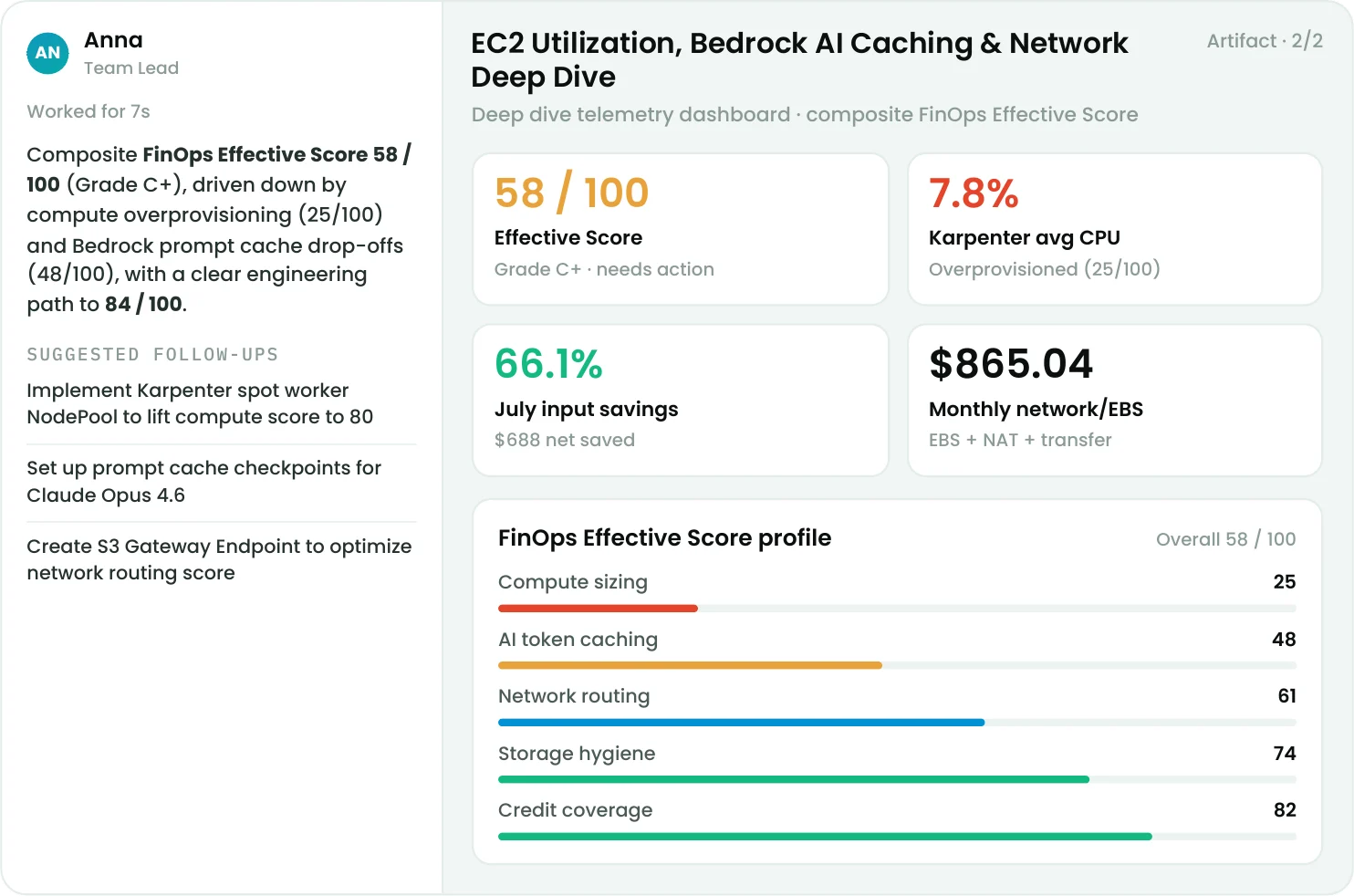
Ask in one sentence, then read the result in three parts: the score, the causes behind it, and the changes that would move it. The screen below is a sample of that shape.
01
Ask for a score rather than a summary. A number you can compare next week tells you whether the work moved anything.
02
Treat the suggested follow-ups as the plan. Each should arrive as a change to approve, not a ticket to write.
03
Re-run the same request on a schedule. Comparable output over time is what turns a one-off review into a habit.